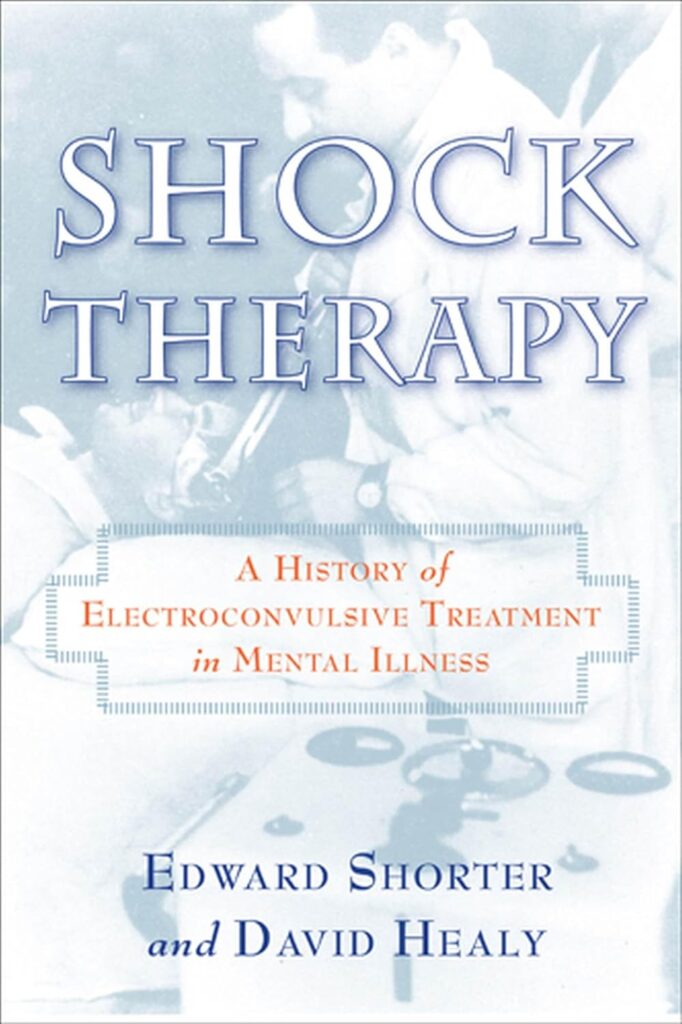
Shock Therapy: A History of Electroconvulsive Treatment in Mental Illness

Edward Shorter

2013

3.8
⚠️Content Warnings
IllnessTrauma
Shock therapy is making a comeback today in the treatment of serious mental illness. Despite its reemergence as a safe and effective psychiatric tool, however, it continues to be shrouded by a longstanding negative public image, not least due to films such as the classic One Flew over the Cuckoo’s Nest, where the inmate of a psychiatric clinic (played by Jack Nicholson) is subjected to electro-shock to curb his rebellious behavior. Beyond its vilification in popular culture, the stereotype of convulsive therapy as a dangerous and inhumane practice is fuelled by professional posturing and public misinformation. Electroconvulsive therapy, or ECT, has in the last thirty years been considered a method of last resort in the treatment of debilitating depression, suicidal ideation, and other forms of mental illness. Yet, ironically, its effectiveness in treating these patients would suggest it as a frontline therapy, bringing relief from acute symptoms and saving lives. In this book, Edward Shorter and David Healy trace the controversial history of ECT and other “shock” therapies. Drawing on case studies, public debates, extensive interviews, and archival research, the authors expose the myths about ECT that have proliferated over the years. By showing ECT’s often life-saving results, Shorter and Healy endorse a point of view that is hotly contested in professional circles and in public debates, but for the nearly half of all clinically depressed patients who do not respond to drugs, this book brings much needed hope.
👥 Readers Engaged 📈 Live Insights 🔮 Trends for This Book
Completion Rate
100%
Avg Time To Finish
18 days
Reading Now
1
Completion Trend
DNF Completed Currently Reading
Tonight’s fit

Best for readers who enjoy:  Dense · Biography · Slow-burn

Dense Canada POV: First-Person Published by Rutgers University Press
Characters
Humans Scientists
Sub-genre
Biography Neuroscience Science
Experience
Dense Humourous Scientific
Pace
Gentle Adrenaline
Gentle
Tone
Light Dark
Balanced
Book length
Short Epic
Balanced
More nuance
Violence
Soft Graphic
Soft
Romance
Background Front and centre
Background
Worldbuilding
Light touch Deep & dense
Light touch
Readability
Breezy Dense
Dense
Humour
Serious Very funny
Balanced
Target audience
Younger Adult
Adult
Edward Shorter

Edward Shorter

Nonfiction, History

Edward Lazare Shorter FRSC is an American-born Canadian historian who is Professor of Psychiatry, Professor of the History of Medicine, and Jason A. Hannah Chair in the History of Medicine in the Faculty of Medicine at the University of Toronto. His specializations are in the history of medicine and psychiatry.

Books By This Author

✍️ Want to leave a review?

Reviews help other readers decide if this book is right for them. Log in or create an account to share your thoughts.

Reader Reviews

3.80
10 ratings
10 reviews
5 stars
4 (40%)
4 stars
3 (30%)
3 stars
1 (10%)
2 stars
1 (10%)
1 stars
1 (10%)
6 January 2026
User Avatar

Loved it: Shock Therapy: A History of Electroconvulsive Treatment in Mental Illness

Mixed feelings on Shock Therapy: A History of Electroconvulsive Treatment in Mental Illness, but I can see why people love it. The pacing stays moving and the chapters end on good beats. Not perfect, but it did enough to keep me turning pages.
0
6 January 2026
User Avatar

Really enjoyed: Shock Therapy: A History of Electroconvulsive Treatment in Mental Illness

Shock Therapy: A History of Electroconvulsive Treatment in Mental Illness is the kind of book that hooks you early if you like its vibe. Characters feel distinct, and the dialogue reads naturally. Not perfect, but it did enough to keep me turning pages.
0
6 January 2026
User Avatar

Loved it: Shock Therapy: A History of Electroconvulsive Treatment in Mental Illness

0
6 January 2026
User Avatar

Loved it: Shock Therapy: A History of Electroconvulsive Treatment in Mental Illness

⚠️ Spoilers: minor plot detail mentioned below. Mixed feelings on Shock Therapy: A History of Electroconvulsive Treatment in Mental Illness, but I can see why people love it. There are a few scenes that genuinely hit emotionally. The middle drags and repeats the same tension a bit too long. There’s a specific turning point late in the book that changes the tone hard — that moment will make or break it for you. Overall, I’d recommend it to the right reader.
Spoiler ahead Click to reveal this review.
0
6 January 2026
User Avatar

Loved it: Shock Therapy: A History of Electroconvulsive Treatment in Mental Illness

Mixed feelings on Shock Therapy: A History of Electroconvulsive Treatment in Mental Illness, but I can see why people love it. Characters feel distinct, and the dialogue reads naturally. If you’re on the fence, try a sample — you’ll know quickly.
0
6 January 2026
User Avatar

Didn’t work for me: Shock Therapy: A History of Electroconvulsive Treatment in Mental Illness

0
6 January 2026
User Avatar

Really enjoyed: Shock Therapy: A History of Electroconvulsive Treatment in Mental Illness

0
6 January 2026
User Avatar

Not for me: Shock Therapy: A History of Electroconvulsive Treatment in Mental Illness

I went into Shock Therapy: A History of Electroconvulsive Treatment in Mental Illness with pretty normal expectations and it surprised me. The middle drags and repeats the same tension a bit too long. Not perfect, but it did enough to keep me turning pages.
0
6 January 2026
User Avatar

Really enjoyed: Shock Therapy: A History of Electroconvulsive Treatment in Mental Illness

⚠️ Spoilers: minor plot detail mentioned below. Shock Therapy: A History of Electroconvulsive Treatment in Mental Illness is the kind of book that hooks you early if you like its vibe. The atmosphere is the standout — it’s easy to sink into. The ending resolves fast compared to how much it builds up. There’s a specific turning point late in the book that changes the tone hard — that moment will make or break it for you. Not perfect, but it did enough to keep me turning pages.
Spoiler ahead Click to reveal this review.
0
6 January 2026
User Avatar

Mixed feelings: Shock Therapy: A History of Electroconvulsive Treatment in Mental Illness

Shock Therapy: A History of Electroconvulsive Treatment in Mental Illness is the kind of book that hooks you early if you like its vibe. Characters feel distinct, and the dialogue reads naturally. A couple of sections could have been trimmed without losing anything. If you’re on the fence, try a sample — you’ll know quickly.
0